MY DEVELOPMENT AS FUTURE LEADER:
Leaders must be skilled at producing a shared vision and they should perform it out in a way that others could analyze it and make efforts to obtain aims in life (Baker, 2014). Prentice (2004) states that leadership is achieving goals through human assistant.
According to Senge cited by Baker (2014) debates in his book “the fifth discipline” about the importance of developing a vision which is useful to others and helps them creating an aim on becoming a leader. It further leads to the process of identifying and communicating in wide ranges to bring in the perspective of vision. However there are different styles of leadership such as democratic: where power is shared, laissez-faire: where power is delegated and autocratic: where power is imposed (Mullins, 2016). I am going to further discuss in this blog about developing my skills to become a leader, gaining experience and the feedback I received from my peers while leading my group in my Postgraduate class.
MY LEADERSHIP BRAND:
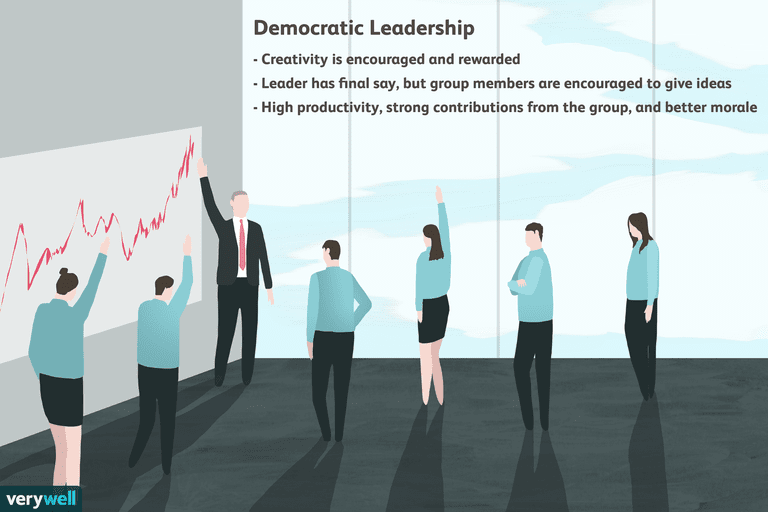
During the session of my Leadership module, I came across the Ricardo’s Semler case study in which Ricardo changes his leadership style from autocratic to democratic and later it benefited his business and employees. My leadership brand is the democratic style of leadership as I seek to create opportunities for individuals and work as one. The democratic style of leadership enhances employees to take part in decision-making and it is also called participative style (Khan, Qureshi, Rauf, Latif and Tahir, 2015). According to Rahimi cited by (Allafchi, 2017) a leader is, whose behavior and style is democratic with his/her people. Another theory implies on leadership is ‘Great Man’ theory which states that leaders are not made, they are born leaders with the qualities of heroic, mythic and leadership (Amanchukwu et al. 2015). One of the greatest leaders I came across is Mohamad Bin Rashid Al Maktoum Governor of Dubai and President of United Arab Emirates (UAE), we can assume that he was born to be a leader because in couple of years His Highness turned desert into a Global Hub City called Dubai.
DETERMINING & EVALUATION OF OWN LEADERSHIP STYLE:
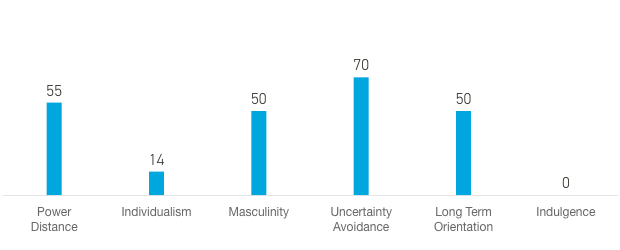
My uncle owns a rent a car business in Dubai and around five employees work under him. When I was eighteen, studying my second year of undergraduate; my father told me to work in my uncle’s company in order to gain some experience. Eight months later, I found myself a totally different person, I use to attend meetings with different clients, look forward to my office works and delegate tasks to other employees. I always wanted to be a democratic leader who can create opportunities for the people unlike just taking all the control in hand, my belief was to make the employees feel about the power so that they are aware of the responsibilities and tend to perform hardwork. When I was near to my graduation, I asked my uncle about building up leadership qualities and as I have a business family background; my uncle suggested me to listen to people whom I come across. Although it was imperative to listen to people from different culture and nationalities but I learned a lot and developed a lot of skills while managing them. Besides my professional tenure, I faced fewer difficulties during my group work in class in my university and Hofstede insight states that Pakistani people are more power distanced (Hofstede, 2019).
Figure 1.1
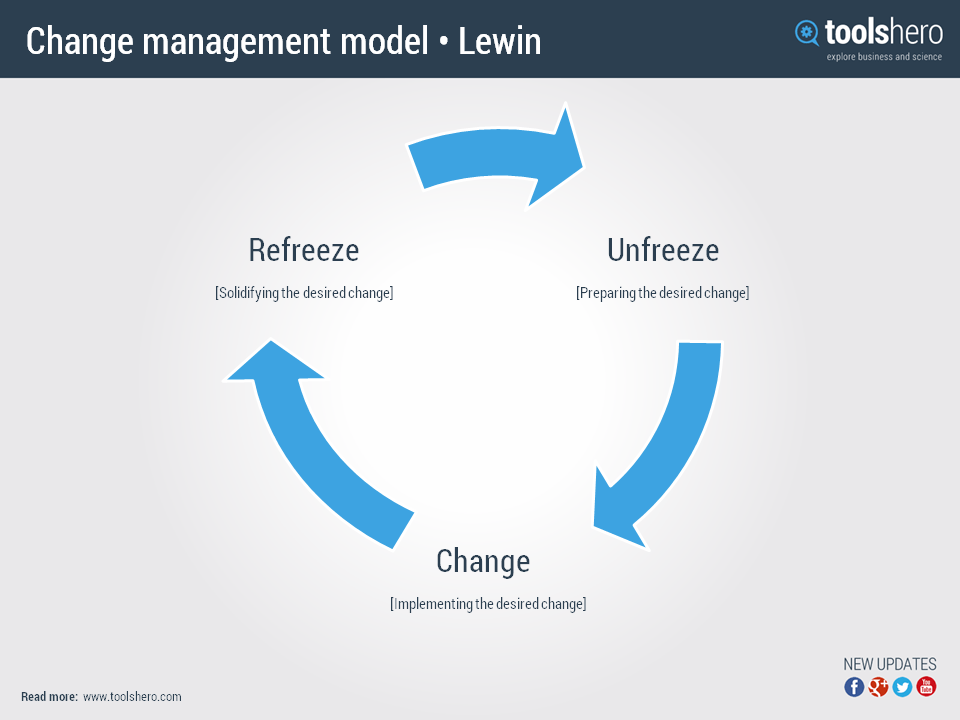
However I have received feedbacks from different people, which helped me in building up myself on professional level. There were positive and negative feedback, the positive feedback always motivated me and from my negative feedback I always learned to do better unlike being demoralized. The feedback from my peers in my university was negative in the starting as I discussed above that I face fewer difficulties but later they appreciated me for my hard work. I showed my leadership style in my group presentation and group debate; my group mates were well satisfied with my performance and my Professors as well. After completing my Masters in Global Business I would work as an intern in corporate firm to gain more better experience and than would go ahead with my own business. I look forward to apply leadership qualities of Grace’s 4V model, which holds four factors of leadership: values, vision, voice and virtue (Grace, 2006). Moreover, since I have planned to run my own business; my aim is to set opportunities for individuals and listen to their ideas and techniques because according to Lewin cited by Billig (2015) democratic leaders focus on listening to others.
Figure 1.2
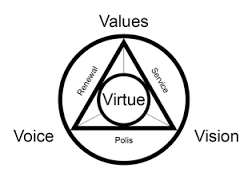
Figure 1.3 (Cherry, 2019)
DEVELOPMENT & SKILLS IN BECOMING A LEADER:
In my journey ahead I would focus on other leadership styles and implement them as being a leader. My aim is to focus on creating opportunities for individuals. I will further focus on developing advance skills in this changing world in order to create examples, although I am not enough capable but I believe in myself.
From 2017 until today, I am an enthusiased and highly motivated individual with a range of communication skills and ability to contribute effectively to a team framework. In future I will tend to keep my morale high to learn from my weaknesses because Leaders or Entrepreneurs never stop learning (Coulter, 2001). I will focus on developing such skills, which will lead to my success in team studies and in building up professional career.
REFERENCES:
- Allafchi, N. (2017) [online] available from <https://dergipark.org.tr/tr/download/article-file/395622> [2 December 2019]
- Amanchukwu, R., Stanley, G. and Ololube, N. (2015) A Review Of Leadership Theories, Principles And Styles And Their Relevance To Educational Management [online] available from <http://article.sapub.org/10.5923.j.mm.20150501.02.html> [3 December 2019]
- Baker, E. (2014) “Leadership And Management—Guiding Principles, Best Practices, And Core Attributes”. Journal Of Public Health Management And Practice 20 (3), 356-357
- BILLIG, M., 2015. Kurt Lewin’s leadership studies and his legacy to social psychology: is there nothing as practical as a good theory? Journal for the Theory of Social Behaviour,45(4), pp.440-460.
- Cherry, K. (2019) Is Democratic Leadership The Best Style Of Leadership? [online] available from <https://www.verywellmind.com/what-is-democratic-leadership-2795315> [3 December 2019]
- Country Comparison – Hofstede Insights (2019) available from <https://www.hofstede-insights.com/country-comparison/pakistan/> [3 December 2019]
- Coulter, M. (2001). Entrepreneurship in action. Upper Saddle River, N.J.: Prentice Hall
- Grace, B. (2006) Ethical leadership: In pursuit of the common good. Seattle, WA: Center for Ethical Leadership.
- Mullins, L., (2016) Management and Organizational Behavior, 11thedn., Harlow: Pearson.
- Prentice, W. (2004) Understanding Leadership [online] available from <https://hbr.org/2004/01/understanding-leadership> [2 December 2019]
- Saqib Khan, M., Qureshi, Q., Rauf, H., Latif, A. and Tahir, M. (2015) [online] available from <https://pdfs.semanticscholar.org/e56c/c277a3f762e705029f2da62e7c9839a8f74a.pdf> [2 December 2019]
- Senge, P. and Senge, P. (n.d.) The Fifth Discipline.

 Leading In A Changing World