MY DEVELOPMENT AS FUTURE LEADER:
Leaders must be skilled at producing a shared vision and they should perform it out in a way that others could analyze it and make efforts to obtain aims in life (Baker, 2014). Prentice (2004) states that leadership is achieving goals through human assistant.
According to Senge cited by Baker (2014) debates in his book “the fifth discipline” about the importance of developing a vision which is useful to others and helps them creating an aim on becoming a leader. It further leads to the process of identifying and communicating in wide ranges to bring in the perspective of vision. However there are different styles of leadership such as democratic: where power is shared, laissez-faire: where power is delegated and autocratic: where power is imposed (Mullins, 2016). I am going to further discuss in this blog about developing my skills to become a leader, gaining experience and the feedback I received from my peers while leading my group in my Postgraduate class.
MY LEADERSHIP BRAND:
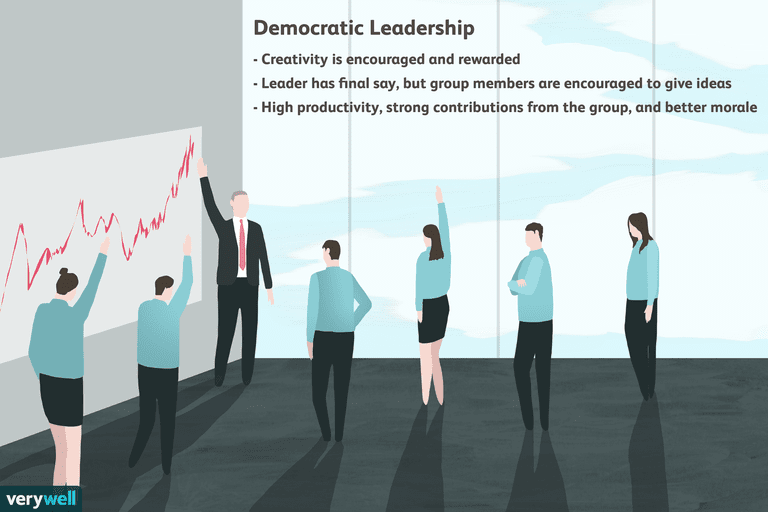
During the session of my Leadership module, I came across the Ricardo’s Semler case study in which Ricardo changes his leadership style from autocratic to democratic and later it benefited his business and employees. My leadership brand is the democratic style of leadership as I seek to create opportunities for individuals and work as one. The democratic style of leadership enhances employees to take part in decision-making and it is also called participative style (Khan, Qureshi, Rauf, Latif and Tahir, 2015). According to Rahimi cited by (Allafchi, 2017) a leader is, whose behavior and style is democratic with his/her people. Another theory implies on leadership is ‘Great Man’ theory which states that leaders are not made, they are born leaders with the qualities of heroic, mythic and leadership (Amanchukwu et al. 2015). One of the greatest leaders I came across is Mohamad Bin Rashid Al Maktoum Governor of Dubai and President of United Arab Emirates (UAE), we can assume that he was born to be a leader because in couple of years His Highness turned desert into a Global Hub City called Dubai.
DETERMINING & EVALUATION OF OWN LEADERSHIP STYLE:
My uncle owns a rent a car business in Dubai and around five employees work under him. When I was eighteen, studying my second year of undergraduate; my father told me to work in my uncle’s company in order to gain some experience. Eight months later, I found myself a totally different person, I use to attend meetings with different clients, look forward to my office works and delegate tasks to other employees. I always wanted to be a democratic leader who can create opportunities for the people unlike just taking all the control in hand, my belief was to make the employees feel about the power so that they are aware of the responsibilities and tend to perform hardwork. When I was near to my graduation, I asked my uncle about building up leadership qualities and as I have a business family background; my uncle suggested me to listen to people whom I come across. Although it was imperative to listen to people from different culture and nationalities but I learned a lot and developed a lot of skills while managing them. Besides my professional tenure, I faced fewer difficulties during my group work in class in my university and Hofstede insight states that Pakistani people are more power distanced (Hofstede, 2019).
Figure 1.1
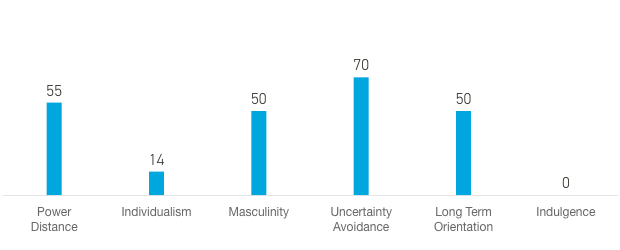
However I have received feedbacks from different people, which helped me in building up myself on professional level. There were positive and negative feedback, the positive feedback always motivated me and from my negative feedback I always learned to do better unlike being demoralized. The feedback from my peers in my university was negative in the starting as I discussed above that I face fewer difficulties but later they appreciated me for my hard work. I showed my leadership style in my group presentation and group debate; my group mates were well satisfied with my performance and my Professors as well. After completing my Masters in Global Business I would work as an intern in corporate firm to gain more better experience and than would go ahead with my own business. I look forward to apply leadership qualities of Grace’s 4V model, which holds four factors of leadership: values, vision, voice and virtue (Grace, 2006). Moreover, since I have planned to run my own business; my aim is to set opportunities for individuals and listen to their ideas and techniques because according to Lewin cited by Billig (2015) democratic leaders focus on listening to others.
Figure 1.2
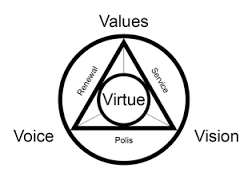
Figure 1.3 (Cherry, 2019)
DEVELOPMENT & SKILLS IN BECOMING A LEADER:
In my journey ahead I would focus on other leadership styles and implement them as being a leader. My aim is to focus on creating opportunities for individuals. I will further focus on developing advance skills in this changing world in order to create examples, although I am not enough capable but I believe in myself.
From 2017 until today, I am an enthusiased and highly motivated individual with a range of communication skills and ability to contribute effectively to a team framework. In future I will tend to keep my morale high to learn from my weaknesses because Leaders or Entrepreneurs never stop learning (Coulter, 2001). I will focus on developing such skills, which will lead to my success in team studies and in building up professional career.
REFERENCES:
- Allafchi, N. (2017) [online] available from <https://dergipark.org.tr/tr/download/article-file/395622> [2 December 2019]
- Amanchukwu, R., Stanley, G. and Ololube, N. (2015) A Review Of Leadership Theories, Principles And Styles And Their Relevance To Educational Management [online] available from <http://article.sapub.org/10.5923.j.mm.20150501.02.html> [3 December 2019]
- Baker, E. (2014) “Leadership And Management—Guiding Principles, Best Practices, And Core Attributes”. Journal Of Public Health Management And Practice 20 (3), 356-357
- BILLIG, M., 2015. Kurt Lewin’s leadership studies and his legacy to social psychology: is there nothing as practical as a good theory? Journal for the Theory of Social Behaviour,45(4), pp.440-460.
- Cherry, K. (2019) Is Democratic Leadership The Best Style Of Leadership? [online] available from <https://www.verywellmind.com/what-is-democratic-leadership-2795315> [3 December 2019]
- Country Comparison – Hofstede Insights (2019) available from <https://www.hofstede-insights.com/country-comparison/pakistan/> [3 December 2019]
- Coulter, M. (2001). Entrepreneurship in action. Upper Saddle River, N.J.: Prentice Hall
- Grace, B. (2006) Ethical leadership: In pursuit of the common good. Seattle, WA: Center for Ethical Leadership.
- Mullins, L., (2016) Management and Organizational Behavior, 11thedn., Harlow: Pearson.
- Prentice, W. (2004) Understanding Leadership [online] available from <https://hbr.org/2004/01/understanding-leadership> [2 December 2019]
- Saqib Khan, M., Qureshi, Q., Rauf, H., Latif, A. and Tahir, M. (2015) [online] available from <https://pdfs.semanticscholar.org/e56c/c277a3f762e705029f2da62e7c9839a8f74a.pdf> [2 December 2019]
- Senge, P. and Senge, P. (n.d.) The Fifth Discipline.
 Leading In A Changing World
Very well written. Wishing you good luck for your future endeavours
LikeLike
Thank you for your warm wishes Mr Pavan.
Baker (2014) said in his article that Leaders should produce vision with their performance so that others can analyse it and make benefit out of it for their future objectives.
There are many people to run companies, organization and countries but a true leader is the one who faces the hardship with motivation and determination to create example for the ones who are affected.
LikeLike
A really good blog!
I really appreciated the claim of your brand of leadership that reflects your attitude.
I would like to know by what means from the feedback you have received, you have been able to determine your strengths and weaknesses finally to plan your progress as a leader.
I wish you the best in the pursuit of your path to becoming a leader.
LikeLike
Thank you Mr Ngomc.
Yes this is true, the democratic style of leadership is my brand because i believe in leading with others, taking others along with me who are associated to me and i will also look forward to create successful opportunities for them. Rahimi said a leader is the person whose style is democratic.
We had couple of group course works in MBA Global Business class and i showed my full determination with my group mates to reach 100% success level. There was negative feedback as well which resulted in lack of communication and regarding my strength i would say that motivation from group leader and negative feedback is my strength as it persuades me to do more better. Whereas my weakness is lack of communication but i am working hard on it and i hope i get a positive feedback in my second semester.
LikeLiked by 1 person
Hello Muhammad, first of all i would like to say it takes a lot to talk about your personal life on a global platform and hats off to you for that. What were your reactions and how you approached to the negative feedbacks that you received?
LikeLike
Hey Prakas
Thank you for appreciation, i would always love to give example from my personal life regarding leadership or any other topic as i implement and do experience from whatever i learn.
Reactions are different at every perspective Prakas, it depends upon what kind of feedback you get. My reaction was normal when i received negative feedback, i passed a smile to my group mate and told him that i will work on it and make sure i am productive next time.
Grote (2015) wrote in his article on Harvard Business Review that whether its boss or co-worker, the same guidance is presented so it is always good to listen carefully, don’t get defensive and ask for time. I did the same thing in my scenario.
LikeLiked by 1 person
Very well written 👌want to read more blogs of yours
LikeLike
Thank you Maha.
I have explained few leadership theories in my blog and would suggest you to implement some in your life. My leadership brand is democratic and i want to become a demorcatic leader.
Back in the seminar in my MBA class i came across a case study of Ricardo Semler who was given control of his father’s business and he was leading in autocratic style which did not benefited his company. Later he changed his leading style to democratic, after which his company achieved success.
LikeLike
Amazingly done ✅ keep it up
Explain how was your experience while writing this blog
LikeLike
Thanks Marry
It is not easy to become a leader and it requires hard work, dedication and motivation.
My experience was more of learning while writing this blog. Since you read, i had made a lot of research work and came across many theories of leadership. My personal experience in past made me learn to listen to people and make analysis from their conversation which i shared in my blog as well.
I will be writing more in future and you will get to read more informative and learning based material.
LikeLike
What an amusing, remarkable and didactic blog. Keep the great work coming.
LikeLike
It takes effort and dedication to become a leader. My suggestion to you will be that apply leadership style in your life and you will be more successful. Thanks
LikeLike
Democratic style of leadership is always preferred in this era because employees are educated enough about their rights. Such an informative, and mind blowing blog that nurtured my thoughts in a more effective manner on democratic leadership. How democratic style of leadership help to involve employees in decision making in mining industry?
LikeLiked by 1 person
I appreciate your comment Ms Saba.
Indeed democratic style of leadership brings success in organisation, employees are asked to take part in decision making and power is dedicated to them as well. This gives a job satisfaction to employee and enhances productivity.
In democratic style leadership, employees are asked to participate in decision making process in a mining company. However, there are different forms of participation in mining sector which are used by employees around the globe. In mining sector employees are asked to take part through financial participation which allows them to become part-owners of the company by allocating shares as supplements to wages. This participation motivates the employee to make greater efforts in productivity as they have direct concern in employee profitability (Lester, 2019).
There are workforce forums conducted in South African mining sector in which employees and employers are provided platforms to discuss non-distributive issues. The work place forums develop efficient productivity skills and enhances power sharing to their employees (Adversial, 1999).
Moreover the workforce forum in mining sector targets qualitative production which means they focus on non-wage matters such as restructuring, working conditions and introduction about new machinery (Niekerk, Christianson and McGregor, 2012)
References:
– Lester, D. (2019) [Online] available from https://core.ac.uk/download/pdf/58915135.pdf [8 December 2019]
– Klerk G Adversial „participation and antagonistic cooperation?: workplace forum, employee
participation and lean production‟ transformation (1999) 40 Transformation 9.
– Van Niekerk A, Christianson M, McGregor M et al Law @ work 2 ed (2012) 391.
LikeLike
A thought provoking blog on leadership style. I really appreciate the contribution of author. Democratic leaders are always in demand and admired by majority of employees working in different companies.
LikeLiked by 1 person
Thanks for the appreciation and your distinctive comment on democratic leadership style.
Democratic style of leadership enhances employees to take part in decision making of organisation and it is also called participative style (Khan, Qureshi, Rauf, Latif and Tahir, 2015). However, most democratic style leadership business succeed significantly as employees are happy and satisfied with their jobs.
Reference:
11. Saqib Khan, M., Qureshi, Q., Rauf, H., Latif, A. and Tahir, M. (2015) [online] available from https://pdfs.semanticscholar.org/e56c/c277a3f762e705029f2da62e7c9839a8f74a.pdf [2 December 2019]
LikeLike
A very interesting blog! Good sources are used and statistical data is well presented. Keep it up! Looking forward to reading more of your work. Best of luck in your future goals 🙂
LikeLike
Hey Zarmina
My sources are truly based on democratic style leadership and my determination to become successful in future. Statistic data describes motive in more details.
Thanks
LikeLike
I appreciate how you explained democratic leadership style.
Keeping all the power in hand is always better for organization; What are your thoughts about it?
LikeLike
Hey Zainab
I would appreciate your question.
Leading in autocratic style can not be more successful as compare to democratic style. This is because one human power cannot control all, it has to be distributed among employees to be more productive. Democratic style of leadership is when power is given to employees and task are dedicated.
During my MBA class session in Leadership module, i came across a Ricardo Semler theory in which he was given the business which was being leaded in autocratic style and it was not productive nor successful. Ricardo planned to change the leadership style by giving power to his employees and turning it into democratic leadership (Hunt, 1995). The business was successful and employees were happy as well.
Refernce
– Hunt, J. (1995) “Book Reviews: Ricardo Semler (1993) Maverick ! London: Century, Pp. 272”. Asia Pacific Journal Of Human Resources 33 (2), 138-140
LikeLike
A discussion on leadership style that incites thought. I respect the writer's effort. Democratic leaders are always on order and valued by the bulk of people going to different firms.
LikeLike
Thank you for your comment.
Indeed democratic style of leaders are valued by many people and the seek success for not only themselves but for others as well.
LikeLike